
In an increasingly connected global economy, speaking a second language isn't just a cultural enrichment — it's a career accelerator. Studies consistently show that bilingual professionals earn more, get promoted faster, and have access to opportunities that monolingual peers simply don't. But with hundreds of languages to choose from, which one will actually move the needle for your career?
This guide breaks down the most valuable languages for career growth in 2026, the industries where language skills matter most, and a practical framework for choosing the right language based on your professional goals.
The Salary Premium: How Much More Do Bilingual Professionals Earn?
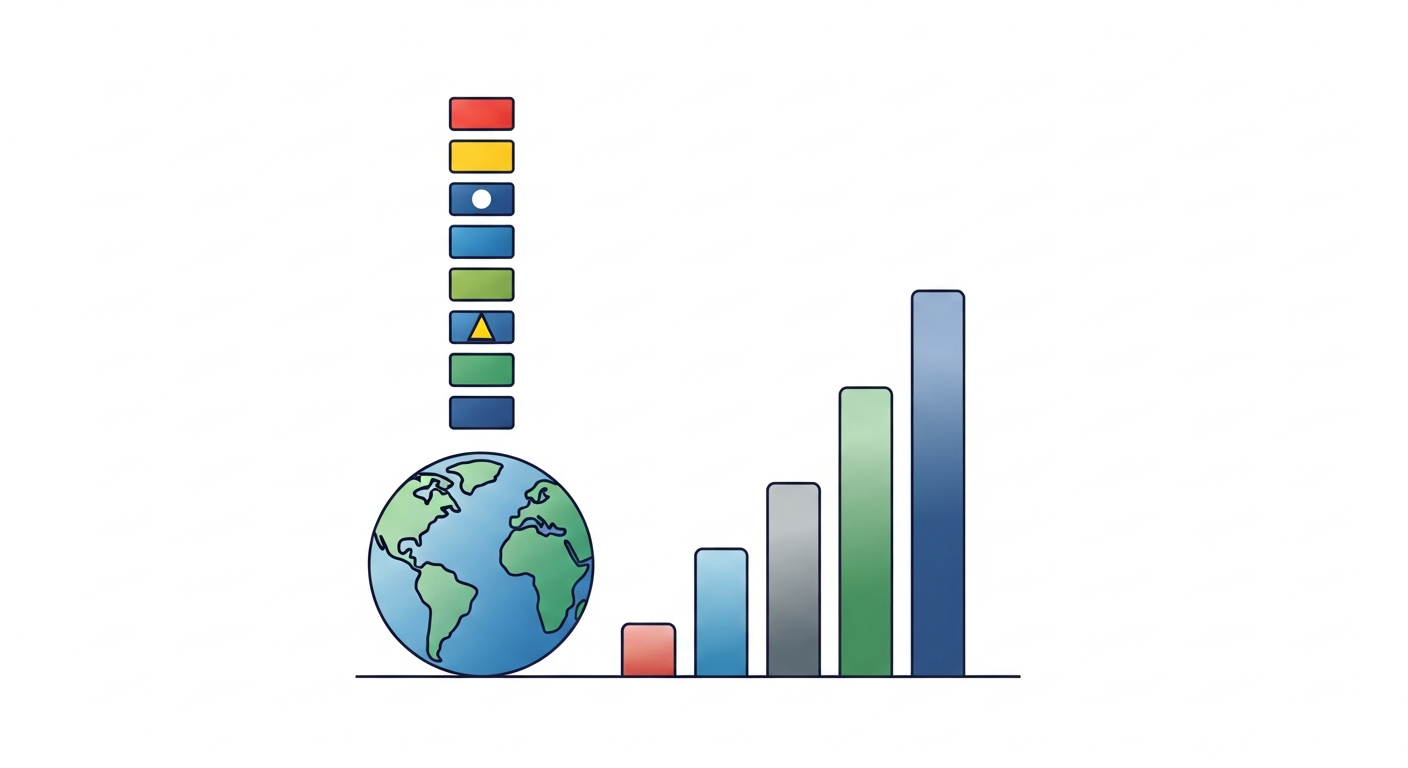
The financial case for language learning is compelling. Research from various labor market studies suggests that bilingual workers earn between 5% and 20% more than their monolingual counterparts, depending on the language, industry, and region.
The premium is highest for languages that are in demand but short supply. Mandarin Chinese, Arabic, German, and Japanese consistently command the largest salary bonuses in English-speaking job markets. Spanish, while enormously useful, has a slightly lower premium in the US because of the larger supply of Spanish speakers — though it remains the most practically useful second language for US-based professionals.
Beyond direct salary increases, language skills create indirect career advantages. You become eligible for international assignments (which often come with relocation packages and accelerated promotion tracks). You can build relationships with clients, partners, and colleagues that monolingual competitors cannot. And you signal cognitive ability, cultural adaptability, and dedication — qualities that hiring managers value across every industry.
The Top Languages for Career Growth in 2026
Here's how the major languages stack up from a career perspective:
Mandarin Chinese sits at the top for sheer economic potential. China is the world's second-largest economy and a dominant force in manufacturing, technology, AI, and international trade. Mandarin speakers are in high demand in supply chain management, international business development, finance, and technology. The difficulty of the language (Category V per the FSI) means that professionals who achieve working proficiency stand out dramatically on the job market. If you're in tech, finance, or international trade, Mandarin offers the highest career ROI among Asian languages.
Spanish is the most broadly useful language for career growth in the Americas. With over 500 million speakers worldwide and the US being home to the second-largest Spanish-speaking population globally, Spanish proficiency is valuable in healthcare, education, social work, law, customer service, marketing, and government. For US-based professionals, Spanish often provides the most immediate and practical career benefit because of the sheer number of daily interactions where it's useful.
German is the powerhouse language for European careers, particularly in engineering, automotive, manufacturing, and finance. Germany has the largest economy in Europe, and German companies (Siemens, BMW, Bosch, SAP, Deutsche Bank) are major global employers. German is also valuable for academic research, as Germany is one of the top destinations for international scholars. For healthcare workers looking to work in Germany, language certification is often a visa requirement — our guide to language requirements for healthcare workers in Germany covers this in detail.
French opens doors across three continents. Beyond France itself, French is an official language in 29 countries, including rapidly growing economies in Africa. International organizations (UN, NATO, EU, Red Cross, Doctors Without Borders) use French as a working language. For careers in diplomacy, international development, luxury goods, and fashion, French remains essential. Africa's economic growth also means that French proficiency will become increasingly valuable for business development on the continent.
Japanese is highly valued in technology, gaming, automotive, and robotics. Japan's economy is the third-largest globally, and Japanese companies maintain significant international operations. The language is particularly valuable if you work in semiconductor manufacturing, consumer electronics, or the entertainment industry. Because fewer Westerners learn Japanese compared to European languages, proficiency gives you a strong competitive edge.
Arabic commands some of the highest language premiums in government, defense, intelligence, energy, and international business. The Middle East and North Africa region is a major center for oil and gas, construction, and increasingly, technology and tourism. Arabic speakers are chronically in short supply in Western job markets, making it one of the most valuable languages for government and security careers.
Korean is the rising star of career languages. South Korea's tech giants (Samsung, LG, SK Hynix, Hyundai) are major global players, and the Korean entertainment industry (K-pop, K-dramas, gaming) is a multi-billion dollar export economy. Korean language skills are increasingly sought after in tech, entertainment, marketing, and international business, with relatively few foreign speakers — meaning less competition.
Industries Where Language Skills Matter Most

International business and trade. This is the most obvious sector. Companies involved in import/export, supply chain management, and international sales actively recruit bilingual professionals. Mandarin, Spanish, German, and Japanese are the most demanded languages in this space.
Healthcare. Hospitals, clinics, and public health organizations need professionals who can communicate with diverse patient populations. Spanish is the most in-demand language in US healthcare, followed by Mandarin, Vietnamese, Arabic, and Korean. In Europe, healthcare workers migrating to Germany need certified German proficiency — often B2 level or higher.
Technology. The global tech industry operates across borders, and companies with offices in multiple countries need team members who can bridge language gaps. Mandarin is especially valuable given the US-China tech relationship, while German matters for European tech hubs like Berlin and Munich. Japanese and Korean are important for hardware and semiconductor industries.
Government and defense. Intelligence agencies, diplomatic services, and military organizations offer significant incentives for speakers of "critical need" languages — typically Arabic, Mandarin, Russian, Farsi, and Korean. Government careers often provide language training and pay bonuses for certified proficiency.
Tourism and hospitality. Hotels, airlines, tour operators, and luxury brands need multilingual staff. French, Spanish, Mandarin, Japanese, and Arabic are the most valuable in this sector. The hospitality industry also offers excellent opportunities to use language skills while traveling.
Education. Teaching English abroad is one of the most accessible ways to live internationally, but speaking the local language elevates you from a basic ESL teacher to someone who can truly integrate and advance in the education sector. French, Spanish, Mandarin, and German are all useful for international education careers.
How to Choose the Right Language for Your Career
Rather than picking the "objectively best" language, use this framework to choose the one that aligns with your specific situation.
Start with your industry. What language would make you more valuable in your current field or the field you want to enter? If you're in tech and interested in AI research, Mandarin connects you to China's massive AI ecosystem. If you're in automotive engineering, German opens doors at BMW, Volkswagen, and Mercedes. If you're in healthcare in the US, Spanish is the clear winner.
Consider your geography. Where do you live, and where do you want to work? Spanish is most valuable in the Americas. French is essential for careers in Africa, Belgium, Switzerland, and international organizations based in Geneva. German matters most within the EU. Arabic is key for the Middle East and North Africa.
Assess the supply-demand gap. The highest premiums go to languages with high demand but low supply of speakers. Arabic, Mandarin, Japanese, and Korean all have significant supply gaps in Western job markets. Spanish, while enormously useful, has a larger pool of speakers competing for bilingual roles.
Factor in your personal motivation. Career ROI matters, but you also need to sustain motivation through thousands of hours of study. If you're fascinated by Korean culture, you'll learn Korean faster and stick with it longer than someone forcing themselves to learn Arabic purely for career reasons. Passion and career value don't have to conflict — but when they do, lean toward the language you're genuinely excited about.
Think long-term. Some markets are growing faster than others. Africa's economy is projected to double by 2050, making French (and increasingly, Swahili and Portuguese) more valuable over time. India's growth makes Hindi potentially valuable. Korea's tech sector shows no signs of slowing. Consider not just where the opportunities are today, but where they'll be in 10-20 years.
How to Add Language Skills to Your Career
You don't need to be fluent to start benefiting professionally. Here's a practical progression:
Level 1: Basic professional courtesy (1-3 months). Learn greetings, pleasantries, and basic phrases. This is enough to impress clients, show cultural awareness in meetings, and build rapport. Even this minimal level differentiates you from colleagues who make no effort.
Level 2: Working proficiency (6-12 months). Handle emails, phone calls, and meetings on familiar topics. You can travel for business and navigate most professional situations. This level is sufficient for many bilingual job postings and typically qualifies you for a language premium.
Level 3: Professional fluency (18-36 months). Negotiate, present, and discuss complex topics. You can work entirely in the target language when needed. This is the level that enables international assignments and senior leadership roles in global organizations.
Level 4: Certified proficiency (varies). Official certifications (DELF/DALF for French, HSK for Chinese, JLPT for Japanese, Goethe-Zertifikat for German) provide verifiable proof of your skills. Many employers and visa programs require specific certification levels.
Getting Started
Pick your language using the framework above, then commit to 30 minutes of daily study. Use your commute for podcasts, your lunch break for app practice, and your evenings for structured courses or tutoring sessions. The key is consistency — six months of daily practice will get you to a level where you can start adding your new language to your resume and LinkedIn profile.
For more guidance on choosing your language, check out our guide to the easiest languages for English speakers based on FSI data, our breakdown of how long it actually takes to learn a language, or our comparison of the best language learning apps and platforms in 2026. If you already know which language you want and need a certification roadmap, explore our guides to German certifications, JLPT levels, or TOPIK levels.