
If you've watched any K-drama, you've heard it: characters suddenly shift from friendly and warm to cold and distant — or vice versa — just by changing a word ending. That shift isn't about vocabulary or even tone. It's about Korean speech levels, and getting them wrong is one of the fastest ways to accidentally offend someone in Korea.
Korean has seven speech levels, though only four are commonly used in modern daily life. Understanding when to use which level is arguably more important than expanding your vocabulary, because using the wrong level sends a social signal you might not intend.
Why Korean Has Speech Levels
Korean speech levels exist because Korean culture places enormous importance on social relationships — specifically, the relative status between speaker and listener. Age, professional rank, familiarity, and social context all determine which speech level is appropriate.
This isn't optional politeness like saying "please" in English. In Korean, the speech level is baked into verb conjugation itself. You literally cannot finish a Korean sentence without choosing a formality level. Every verb ending signals how you view your relationship with the person you're talking to.
English speakers often find this uncomfortable at first. We're used to treating everyone more or less the same linguistically. But Korean speakers navigate these levels automatically — they grew up with it and find it natural, even comforting. It provides clear social structure that reduces ambiguity in interactions.
The Four Speech Levels You Actually Need
Korean technically has seven speech levels, but three of them are either archaic or extremely specialized. Focus on these four:
Formal Polite (하십시오체 / Hasipsio-che)
This is the most formal level used in modern Korean. You'll hear it in news broadcasts, military settings, formal presentations, customer service, and public announcements.
Verb ending: -ㅂ니다 / -습니다 (statements), -ㅂ니까 / -습니까 (questions)
Example: 감사합니다 (gamsahamnida) — "Thank you" in formal polite. You hear this everywhere and it's the first Korean phrase most people learn.
When to use it: job interviews, speaking to someone much older or higher-ranking, formal events, first meetings with people significantly senior to you, presentations at work, and talking to customers if you work in service.
Informal Polite (해요체 / Haeyo-che)
This is the workhorse of Korean speech. It's polite enough for virtually any situation but relaxed enough for daily conversation. If you only learn one speech level, learn this one.
Verb ending: -아요 / -어요 / -해요
Example: 감사해요 (gamsahaeyo) — "Thank you" in informal polite. Slightly softer and warmer than 감사합니다.
When to use it: most everyday situations, talking to strangers, coworkers of similar rank, acquaintances, store clerks, restaurant staff, older people you have a friendly relationship with, and anyone you're not sure about (when in doubt, use 해요체).
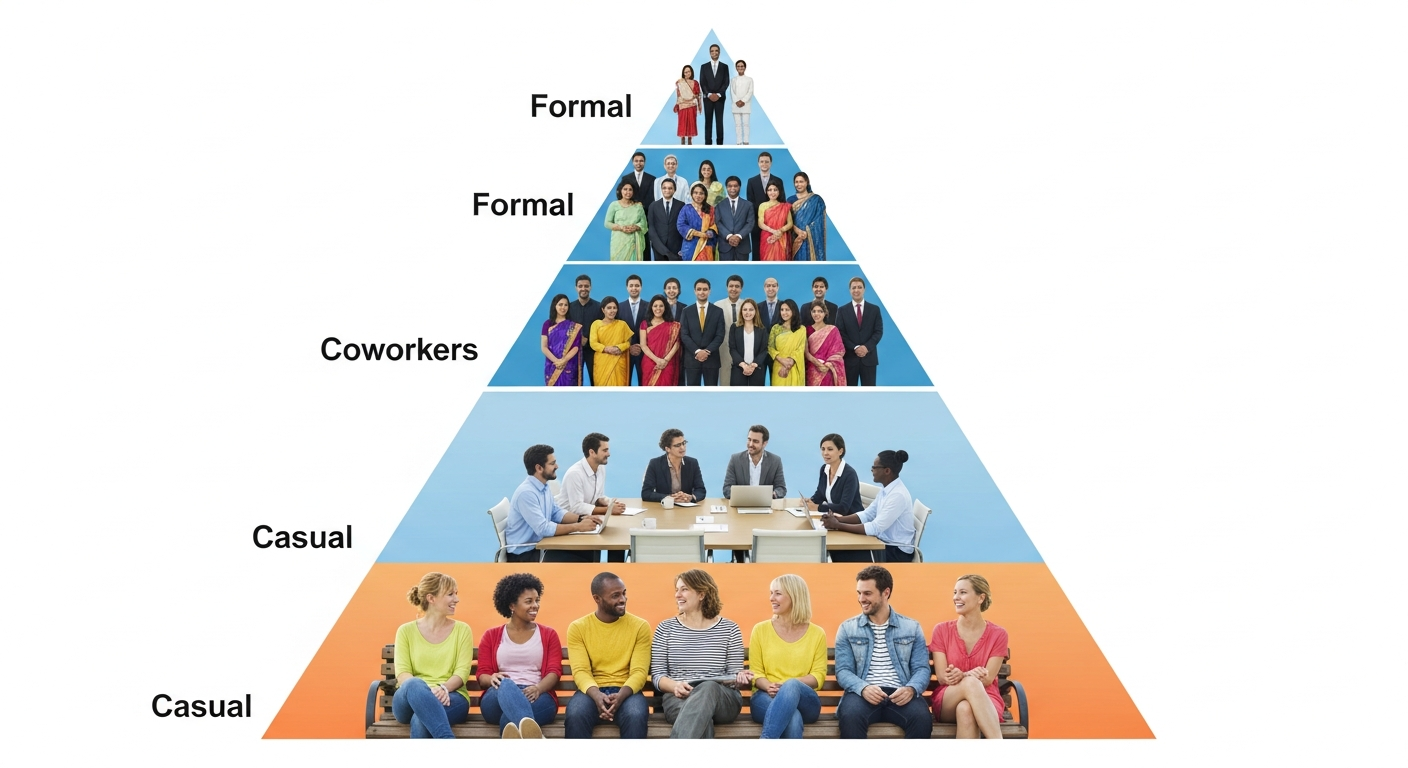
Casual (반말 / Banmal)
This is informal speech used between close friends, with younger people, or when someone explicitly gives you permission to drop formality. Using this with someone you shouldn't is a serious social faux pas.
Verb ending: -아 / -어 / -해 (basically 해요체 without the 요)
Example: 고마워 (gomawo) — "Thanks" in casual speech.
When to use it: close friends of the same age or younger, children, siblings, romantic partners (once the relationship is established), and anyone who says "말 편하게 해요" (speak comfortably / drop the formality).
Critical rule: Never use banmal with someone older than you unless they explicitly invite you to. Even if you've known them for years. Even if they seem cool and casual. Wait for them to suggest it. In Korean culture, the older or senior person decides when formality can be dropped, not the younger person.
Formal Casual (해라체 / Haera-che)
This level appears mainly in writing: textbooks, newspapers, academic papers, and some literary works. In speech, it's used by parents speaking to children or in very specific hierarchical contexts.
Verb ending: -다 (statements), -니 / -냐 (questions)
You'll encounter this in written Korean constantly, so recognizing it matters. But for speaking, focus on the three levels above.
How Age Determines Everything
In Korea, one of the first things people establish when meeting someone new is relative age. This isn't nosiness — it's a practical necessity for choosing the right speech level.
If someone is even one year older than you, the default expectation is that you speak to them in polite form (해요체 at minimum) while they may speak to you in casual form (반말). This applies even among close friends. A friend who's one year your senior is your 형 (hyung, if you're male) or 언니 (unni, if you're female) — not just a friend, but a specifically older friend with a specific title.
The age question comes up fast. You might be asked "몇 살이에요?" (How old are you?) or "몇 년생이에요?" (What year were you born?) within minutes of meeting someone. This isn't rude in Korean culture — it's necessary social calibration.
Honorific Vocabulary
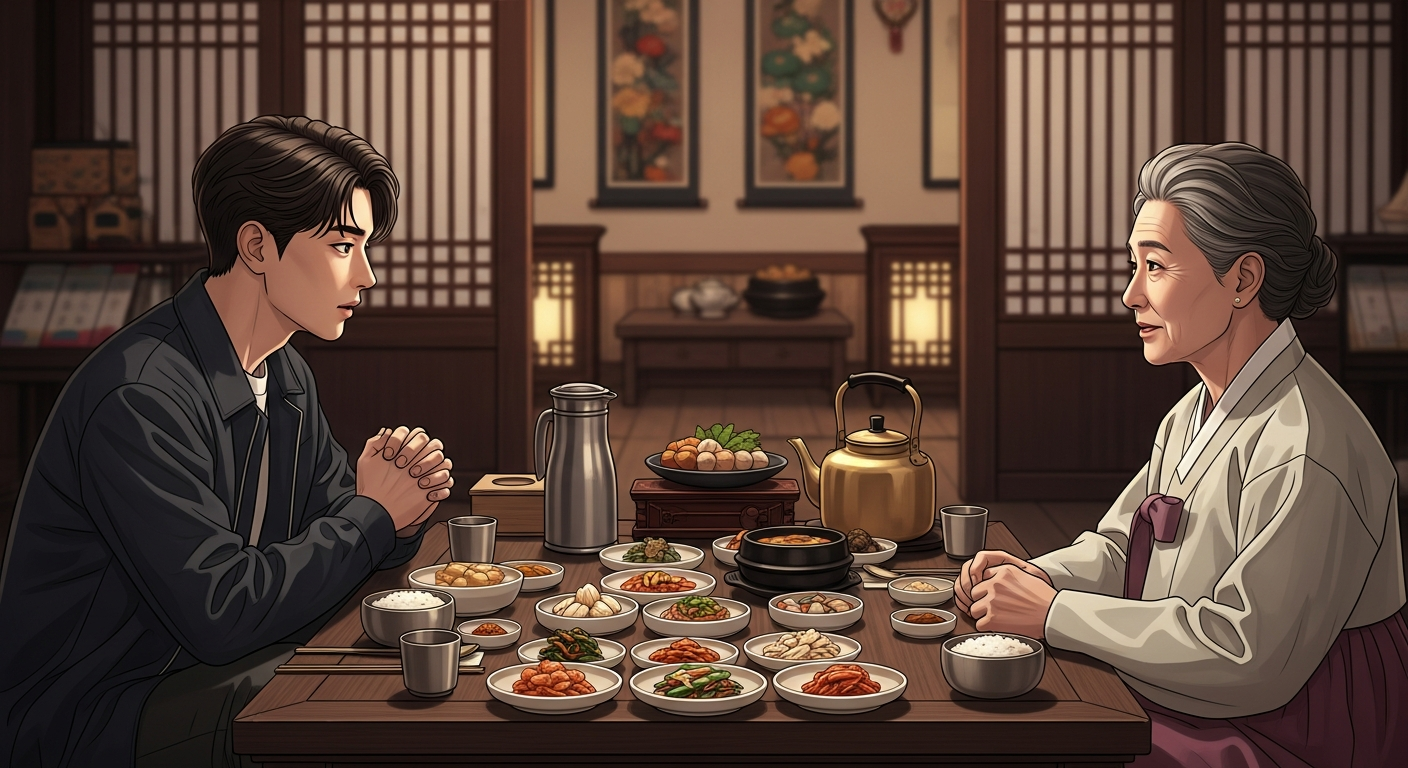
Beyond speech levels, Korean has honorific vocabulary — special words used when talking about or to respected people.
Eating: 먹다 (meokda) is the plain verb for "eat." When talking about someone you respect eating, you say 드시다 (deusida) or 잡수시다 (jabsusida). You'd never say your grandmother 먹어요 — you'd say 드세요.
Sleeping: 자다 (jada) is plain. The honorific form is 주무시다 (jumusida). "Did grandfather sleep well?" uses 주무셨어요 (jumusyeosseoyo), not 잤어요 (jasseoyo).
Being/existing: 있다 (itda) is plain. The honorific is 계시다 (gyesida). "Is the teacher here?" uses 선생님 계세요? not 선생님 있어요?
Speaking: 말하다 (malhada) is plain. The honorific is 말씀하시다 (malsseum-hasida).
Giving: 주다 (juda) is plain. The honorific for the giver is 주시다 (jusida). When you give something to a respected person, use 드리다 (deurida).
You don't need to memorize all honorific vocabulary immediately. Start with the common ones (eating, sleeping, existing, speaking) and add more as you encounter them.
The -시- Honorific Marker
The most useful grammatical tool for showing respect is the -시- (si) honorific marker, which you insert into verbs when the subject of the sentence is someone you respect.
Plain: 가다 (gada) — to go. Honorific: 가시다 (gasida) — to go (respectfully).
This works with both 해요체 and 합니다체: 가세요 (gaseyo) or 가십니다 (gasipnida). The -시- marker transforms any verb into its respectful form.
Use it when the person you're talking about is older than you, holds a higher position, or is someone you want to show respect to. Your boss 가세요 to lunch. Your friend the same age just 가요.
Common Mistakes Foreigners Make
Using banmal too early. This is the number one mistake. Just because someone is friendly doesn't mean they've given you permission to use casual speech. Many Koreans will tolerate it from foreigners without correcting you, but they notice — and it affects how they perceive you.
Mixing levels in one sentence. Pick a level and stay consistent within a conversation. Switching between 합니다 and 해요 in the same exchange sounds unstable and confusing.
Over-formalizing with friends. Once someone your age has established a friendly relationship with you and you've agreed to use casual speech, sticking with 해요체 can feel cold and distancing. Reading the social cue to drop formality is just as important as knowing when to keep it.
Ignoring self-lowering language. Korean politeness isn't just about elevating the other person — it also involves lowering yourself. Use 저 (jeo) instead of 나 (na) for "I" when speaking politely. Say 저희 (jeohui) instead of 우리 (uri) for "we" in formal contexts.
How K-Dramas Teach Speech Levels
K-dramas are actually excellent for learning speech levels because the drama often revolves around social dynamics that speech levels make explicit. Watch for these patterns:
When a character switches from 해요 to 반말 with someone, it's a significant relationship shift — often signaling growing closeness or deliberate disrespect. When a character uses 합니다체 with their in-laws, that's formal respect. When the CEO speaks in 반말 to employees but they respond in 합니다체, that's hierarchy in action.
Try watching a K-drama episode with this lens. Pause when characters switch speech levels and ask yourself why the shift happened. This contextual learning is more effective than memorizing rules from a textbook.
For more on learning Korean through entertainment, see our guide to learning Korean through K-pop.